How Workforce Training Helps Businesses and Employees Succeed
Workforce training stands as a critical investment that delivers measurable returns for both organizations and their employees. Companies face constant pressure to adapt to technological advances, market shifts, and evolving customer expectations. At the same time, employees seek opportunities to develop their capabilities and advance their careers. The intersection of these needs creates a strategic opportunity that, when properly executed, transforms operational performance and positions businesses for sustained growth in competitive markets.
Understanding the Value of Workforce Development
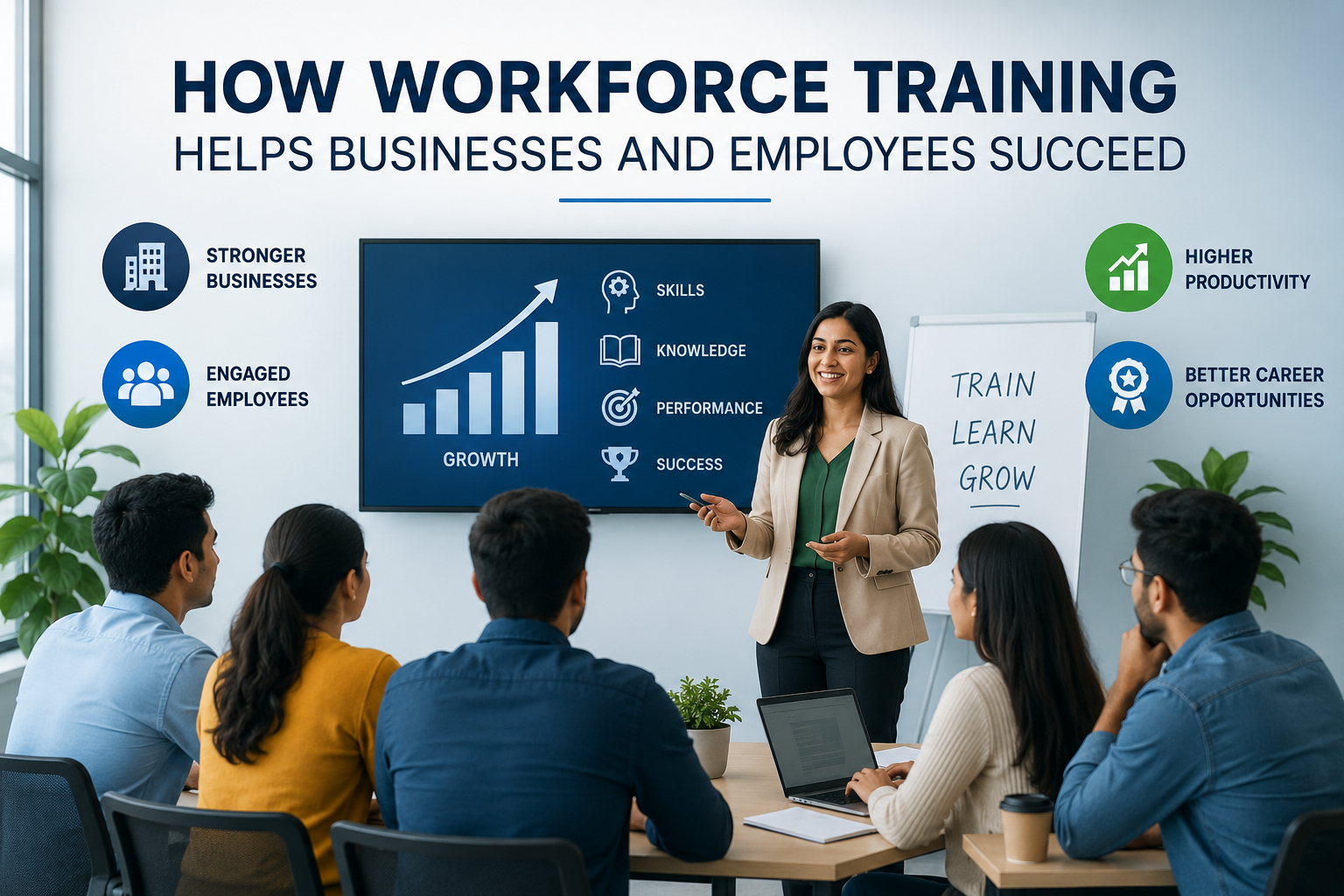
Workforce development represents a strategic investment in human capital that yields measurable returns for both organizations and employees. Companies that prioritize training programs experience enhanced productivity, reduced turnover rates, and improved competitive positioning in their markets. Employees gain updated skills, increased job satisfaction, and greater career mobility.
The financial impact proves substantial. Organizations report higher profit margins when workers possess current competencies aligned with business objectives. Meanwhile, employees with advanced training command better compensation and demonstrate stronger engagement levels.
Beyond immediate gains, workforce development creates sustainable advantages. Businesses build internal talent pipelines, reducing recruitment costs and preserving institutional knowledge. Employees develop adaptability, preparing them for evolving industry demands. This reciprocal value proposition establishes workforce training as essential rather than optional.
Identifying Skills Gaps and Business Performance Needs
Successful training initiatives begin with systematic assessment of organizational capabilities against strategic objectives. Organizations must conduct thorough skills audits to identify performance gaps that hinder productivity and competitiveness.
This process involves analyzing current employee competencies, reviewing key performance indicators, and benchmarking against industry standards. Effective gap analysis examines both technical and soft skills deficiencies across departments.
Leaders should gather input from supervisors, review customer feedback, and monitor operational metrics to pinpoint specific training needs. Understanding technological advancements and market shifts helps organizations anticipate future skill requirements.
Data-driven assessment tools, employee surveys, and performance evaluations provide concrete evidence of capability shortfalls. By aligning identified gaps with business goals, companies can prioritize training investments that deliver measurable returns and support long-term strategic growth.
Working With a Full Service Recruiting Firm to Strengthen Hiring
While identifying skills gaps addresses development of existing employees, organizations often need external expertise to attract new talent that meets evolving business requirements. Full service recruiting firm provide all-encompassing solutions beyond basic candidate sourcing. These partners conduct market analysis, develop targeted recruitment strategies, and screen candidates against specific competency frameworks aligned with business objectives.
Professional recruiters maintain extensive networks and utilize advanced assessment tools to identify candidates possessing both technical skills and cultural fit. They streamline hiring processes, reducing time-to-fill metrics and minimizing costly hiring mistakes. Additionally, these firms offer insights into competitive compensation packages and emerging talent trends.
Designing Training Programs Around Employee and Company Goals
Once recruitment brings qualified talent into an organization, strategic training programs must bridge the gap between individual capabilities and business objectives. Effective program design begins with evaluating current skill levels against required competencies for specific roles and future organizational needs. Companies should align training initiatives with measurable business outcomes while considering employee career aspirations.
This dual focus creates engagement and guarantees resources address genuine performance gaps. Skills evaluations, manager feedback, and employee input identify priority areas requiring development. For organizations in the skilled trades sector, HVAC training in Texas can help employees develop specialized technical competencies that align with regional workforce demands and industry standards. Training methods should vary based on learning objectives, technical skills may require hands-on workshops, while leadership development benefits from mentoring and simulations.
Regular evaluation through performance metrics and employee feedback determines program effectiveness. When training supports both organizational growth and individual advancement, companies build capable workforces prepared for evolving challenges while improving retention and satisfaction.
Improving Productivity Quality and Operational Consistency
Productivity gains emerge when employees consistently apply standardized processes that minimize errors and waste. Training programs establish clear protocols that eliminate guesswork and reduce time spent on corrective actions. When workers understand proper procedures, they complete tasks efficiently without supervision.
Quality improvements follow naturally from thorough training. Employees equipped with proper techniques produce consistent outputs that meet established standards. This reliability reduces customer complaints and strengthens brand reputation. Operational consistency across teams becomes achievable when all staff members receive identical instruction. Standardized training guarantees every employee performs tasks the same way, regardless of shift or location.
This uniformity simplifies management oversight and facilitates scalability. Organizations can replicate successful processes across multiple sites, maintaining quality standards while expanding operations. Documentation of training protocols creates institutional knowledge that survives personnel changes.
Supporting Employee Engagement Retention and Career Growth
Training investments demonstrate organizational commitment that directly influences employee satisfaction and loyalty. Employees who receive development opportunities feel valued and are more likely to remain with their employer long-term, reducing costly turnover rates. Structured training programs provide clear advancement pathways, enabling workers to acquire skills necessary for promotional opportunities within the organization.
Professional development also increases engagement by challenging employees and preventing stagnation. Workers equipped with relevant competencies experience greater job satisfaction and confidence in their roles. This engagement translates to improved morale and workplace culture.
Furthermore, training signals that leadership prioritizes employee futures rather than viewing staff as expendable resources. Organizations that invest in workforce development cultivate talent pipelines internally, ensuring business continuity while simultaneously fulfilling employees’ career aspirations and growth expectations.
Developing Leadership Communication and Problem-Solving Skills
Effective workforce training extends beyond technical competencies to cultivate essential leadership capabilities that strengthen organizational performance. Structured programs develop communication skills that enable employees to articulate ideas clearly, facilitate productive discussions, and resolve conflicts constructively. These training initiatives equip participants with frameworks for analyzing complex situations, identifying root causes, and implementing sustainable solutions.
Leadership development also emphasizes decision-making under pressure, strategic thinking, and adaptability in dynamic environments. Through simulation exercises and real-world case studies, employees learn to balance competing priorities while maintaining focus on organizational objectives.
Training modules addressing emotional intelligence help leaders build trust, motivate teams, and navigate interpersonal challenges effectively. Organizations investing in these developmental opportunities create pipeline talent capable of assuming greater responsibilities while driving continuous improvement throughout all operational levels.
Measuring Learning Outcomes and Business Impact
Organizations implementing extensive training programs must establish rigorous assessment frameworks to validate their investments and demonstrate tangible returns. Effective measurement combines quantitative metrics, such as productivity gains, revenue increases, error reduction rates, and time-to-competency, with qualitative indicators like employee confidence and skill application.
Pre- and post-training assessments reveal knowledge acquisition, while performance evaluations conducted 30, 60, and 90 days after training determine skill retention and workplace integration. Advanced organizations utilize control groups to isolate training effects from other variables.
Business impact analysis extends beyond individual performance to examine departmental efficiency, customer satisfaction scores, and employee retention rates. Digital learning platforms provide real-time analytics, enabling organizations to identify skill gaps, adjust curricula, and calculate return on investment with precision. This data-driven approach guarantees training initiatives align with strategic objectives.
Also Read – GIMS Staff Nurse Recruitment 2026 Notification OUT For 100 Posts, Apply Online
Building a Culture of Continuous Learning and Long-Term Success
While measurement validates training effectiveness, sustained organizational excellence requires embedding learning into the fundamental fabric of workplace culture. Organizations must shift from viewing training as isolated events to establishing continuous development as a core operational principle.
Leadership plays a critical role by modeling learning behaviors, allocating resources for ongoing education, and recognizing employees who pursue skill enhancement. Creating accessible learning pathways through digital platforms, microlearning modules, and peer mentoring programs guarantees development opportunities remain available regardless of schedule constraints.
Successful cultures encourage knowledge sharing, normalize failure as learning opportunities, and align individual growth with strategic objectives. When employees perceive learning as integral to advancement rather than optional, organizations build adaptive workforces capable of steering market changes and driving sustained competitive advantage.