Is Switching from IT to a Government Job Still Worth It in India?
You have watched colleagues disappear in quiet restructuring waves. You still draw a solid private-sector package, yet every new AI tool announcement and every delayed appraisal makes the family pressure louder. Parents keep repeating the same line: a government job means lifetime stability. You know the competition is brutal, the hierarchy can feel archaic, and the pure technical challenge may shrink. The real question is not whether government jobs in India are safer — they are. The question is whether the trade-off in growth, skills and lifestyle is the one you can live with for the next twenty years.

What Does Switching from IT to a Government Job Actually Mean Today?
Switching from IT to a government job means moving from project-driven, client-billing private tech roles into permanent or long-term contractual positions under central or state governments, PSUs, or specialised agencies such as NIC, DRDO, ISRO, CDAC or public-sector banks. The move is driven less by salary upside and more by near-zero layoff risk, fixed hours and pension security that private employment no longer reliably offers.
Most mid-career IT professionals who succeed do so through targeted technical recruitment (Scientist-B, IT Officer Scale-I, lateral-entry scientific posts) rather than generalist exams. The decision is not binary — many keep freelancing or open-source work alive to protect skills.
The competition remains extreme. Official data shared in Parliament showed roughly 300 applicants for every central government vacancy in recent cycles. That number has not softened.
How Do Salary and Total Compensation Really Compare Over Ten Years?
Government technical posts start lower than mid-level private CTC but close the gap through DA revisions, HRA and non-cash benefits. Private IT can pull far ahead for high performers, yet the trajectory is not guaranteed.
| Stage | Typical Government Technical Role (Level 10) | Mid-Level Private IT (Average Performer) | Top-Quartile Private Product Role |
| Year 1 in-hand | ₹70,000–95,000 | ₹80,000–1,20,000 | ₹1,40,000–2,00,000+ |
| Year 5 | ₹90,000–1,20,000 | ₹1,20,000–1,80,000 | ₹2,00,000–3,50,000 |
| Year 10 | ₹1,20,000–1,60,000 | ₹1,50,000–2,50,000 | ₹3,00,000–6,00,000+ |
| Retirement security | NPS + 14% employer match + medical | EPF only | Mostly EPF + equity (variable) |
Variance is driven by city HRA category, current DA rate and whether the post carries special allowances (running allowance is rare in pure IT roles). Confirm the exact pay matrix and current DA in the latest 7th CPC revision and the specific recruitment notification.
What Are the Real Differences in Job Security and Work-Life Balance?
Government employment still offers the closest thing to permanent security available in India. Private IT, especially services firms, has moved into structural headcount reduction driven by AI productivity gains. TCS alone cut more than 12,000 roles in one recent cycle; industry estimates put the cumulative risk for mid-career professionals in the low hundreds of thousands over a few years.
Work-life balance is the second strongest reason people leave. Most central technical roles run closer to fixed office hours. Night calls, weekend releases and client-timezone pressure are rare outside a few high-visibility projects. The flip side is slower decision-making and bureaucratic layers that can frustrate engineers used to shipping weekly.
Tip: Speak to at least two people currently working in the exact organisation and cadre you are targeting. Public-facing descriptions of “9-to-5” often hide the reality of file movement delays and inter-departmental coordination load.
Which Government IT Roles Are Actually Accessible for Experienced Professionals?
Not every government job requires starting from SSC CGL or UPSC. Targeted routes exist:
- NIC Scientist-B / Technical Assistant — e-governance platforms, national portals
- DRDO / ISRO Scientist-B or lateral Scientist-C/D — software for defence and space systems
- IBPS Specialist Officer (IT) — core banking, cybersecurity, digital channels
- CDAC project and permanent roles — advanced computing, AI, cybersecurity
- State e-governance and Smart City PMUs — contractual but often extended, higher cash packages
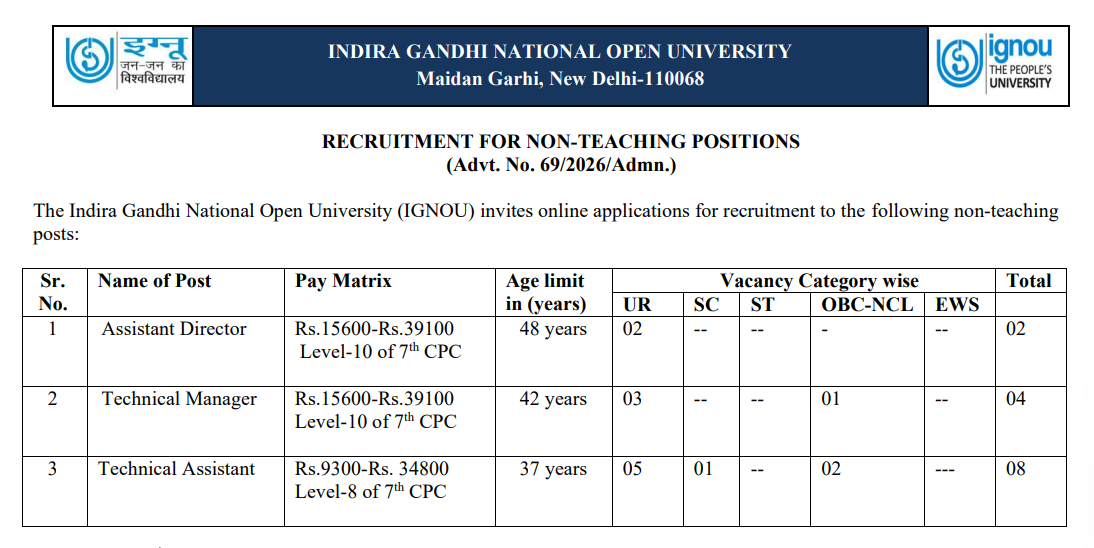
Eligibility usually requires a relevant engineering degree plus, for higher scientific posts, GATE or organisation-specific tests. Lateral entry for experienced candidates is expanding in DRDO and some MeitY organisations. Age limits and experience clauses must be verified in each advertisement.
Does Switching Mean Your Technical Skills Will Stagnate?
This is the most under-discussed risk. Many pure development and product roles inside government departments run on older stacks and longer release cycles. After three to five years, the gap with private product companies can become hard to close if you ever want to return.
The exception is cybersecurity, cloud infrastructure and data platforms inside CERT-In, NIC and certain PSUs — these stay closer to current industry practice. Side projects, open-source contributions or limited freelancing remain the practical hedge for most switchers.
A consistent observation from people who made the move is that the first two years feel like a holiday; by year four the intellectual restlessness returns unless the role itself involves active system building.
Who Should Actually Make the Switch — and Who Should Stay?
Choose the government route if:
- Family responsibilities or risk tolerance make even a three-month unemployment gap unacceptable
- You value predictable hours and the ability to plan personal life years ahead
- Pension and lifetime medical coverage matter more than peak earning years
- You are willing to invest 12–24 months of serious preparation while still employed
Stay in private IT (or move to product / GCC roles) if:
- You still want the option of emigrating on an H-1B or similar pathway
- Continuous skill growth and higher absolute earnings remain non-negotiable
- You can tolerate periodic market cycles and are already in a high-demand specialisation (AI/ML engineering, cybersecurity architecture, platform engineering)
The hybrid path — government technical role plus disciplined side technical work — is the option many successful switchers quietly follow.
Frequently asked questions
Is it realistic to clear a government technical exam after 5–8 years in private IT?
Yes, provided you treat preparation as a second job for 12–18 months. Domain knowledge helps in professional knowledge papers (IBPS SO IT, NIC, DRDO). The quantitative and reasoning sections still require deliberate practice. Many mid-career candidates clear these exams while working.
Will my private-sector experience count for higher starting pay or faster promotion?
In pure scientific cadres (DRDO, ISRO), lateral entry at Scientist-C or D is possible with the required years. In most other organisations, experience is valued at the interview stage, but pay starts at the notified level. Confirm the specific advertisement.
How bad is the salary drop in the first three years?
For someone currently earning ₹1.2–1.8 lakh in-hand, a Level-10 government post often means a visible drop in take-home for the first 2–3 years. DA revisions and HRA partially offset this. The gap narrows by year 5–7 for average private performers and widens further for top private performers.
Can I still aim for foreign opportunities after joining a government job?
It becomes significantly harder. Most central technical posts do not facilitate easy long-term foreign secondments the way private product companies do. If emigration remains a core life goal, the private path keeps more doors open.
What happens to my technical skills after five years in a typical government IT role?
In many departments, the stack and release cadence lag private product companies. Cybersecurity, cloud and large e-governance platforms are the exceptions. Side coding and open-source work are the practical insurance policy most switchers adopt.
Is the competition for technical government posts lower than for generalist exams?
Somewhat. The absolute number of applicants is lower, but the pool is more qualified. Still expect multi-stage written tests and interviews. Success rates remain single-digit.
The Stability You Are Looking For Has a Clear Price
The anxiety that brought you here is legitimate. Private IT in India is going through a structural reset driven by AI productivity and client pressure for outcome-based delivery. Government technical roles still offer the closest approximation to permanent employment and predictable hours that most Indian families value.
That security comes with slower technical growth, hierarchical culture and, for many, a temporary drop in cash income. The people who thrive after the switch are those who enter with eyes open, protect their skills deliberately, and treat the government job as the foundation rather than the entire career identity.
If family responsibilities and sleep quality matter more than the next appraisal cycle, begin the targeted preparation now while you still have a private-sector safety net. If continuous skill growth and the option of emigrating still sit at the centre of your life plan, stay private and keep upgrading into the roles AI is creating rather than the ones it is eliminating.